


India’s High Commissioner to Canada, Sanjay Kumar Verma, stated that the Indian government is cooperating with an American inquiry into an alleged foiled assassination attempt and not Canada’s investigation into the June killing of Khalistani terrorist Hardeep Singh Nijjar in British Columbia’s Surrey. This is due to a difference between the information both nations shared in their investigations. Speaking to CTV’s Question Period host Vassy Kapelos, Sanjay Kumar Verma said that his understanding is that US authorities have shared more specific information regarding the inquiry with India than Canada has, and he stressed that this is likely the differentiating factor in India’s cooperation in both cases.
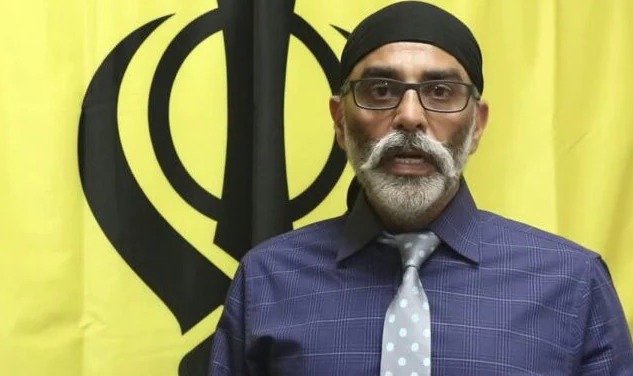
Recently, the UK-based Financial Times published a report claiming that the US foiled a plan to allegedly assassinate India-designated terrorist Gurpatwant Singh Pannun on American soil. According to the Financial Times, which quoted people familiar with the matter, the US had informed India of details regarding the alleged plot to kill Pannun.
Earlier in September, Canadian Prime Minister Justin Trudeau made allegations regarding India’s involvement in Nijjar’s killing. India has rejected the allegations, calling them “absurd” and politically motivated.
Mr. Verma said India was “absolutely” and “substantially” not involved in the homicide, naming it a “motivated and absurd allegation.” The allegations caused political tensions between the two nations.
The Indian envoy said that his understanding is that Indian authorities are cooperating in the American inquiry as they’ve been presented with “inputs that are fairly presentable.”
“One is that the inquiry in the case of the US, as far as I know and understand, because again, I do not oversee India-US relations, is at an important advanced stage. And thus, I presume that there would be better information shared within India,” he told CTV News.
“Those inputs are a nexus between mobsters, drug traffickers, terrorists, and gun runners in the US, and there’s a belief that some of the Indian connections—now when I say Indian connections, I do not mean Government of India connections, there are 1.4 billion people. Because we’ve got inputs, which are fairly presentable,” he said.
Speaking about Canada’s inputs related to Nijjar’s killing, he said that Indian authorities won’t be able to respond to the case as exchanges could have some data of the case. However, allegations and data don’t make it specific and applicable.
Asked whether Canada’s public security counsel participated inputs related to allegations related to Nijjar’s killing, he said, “Until the time it isn’t specific or applicable to the case, we won’t be able to respond to it. There could be a lot of discussion. Exchanges could have allegations, exchanges could have some data of the case, but allegations and data don’t make it specific and applicable.”
“So we need to have that data. And we’re always ready to do that. However, the US did give us inputs, if you look at the most recent incident where there are some allegations put out in one of the journals against India. And we’ve already started following up on that,” he told CTV News.
Mr. Verma stressed that exchanges between India and Canada did take place during Canada’s National Security Adviser’s visit to India. However, he added that India demanded specific information to seek authorization from legal authorities to conduct an inquiry.
Asked whether Canada’s National Security Advisor didn’t partake in any specific allegation, Sanjay Kumar Verma said, “So exchanges took place. But we demanded something specific and applicable to go back to our legal authorities to seek authorization to do an inquiry that we’d have wanted to do. So until the time that those kinds of inputs aren’t there, in a country of rule of law, it’ll not be possible for us to move forward on the examinations.”
Revealing details regarding the inputs shared by the US with India, Mr. Verma said that these inputs are regarding a nexus between mobsters, drug traffickers, terrorists, and gun runners in the US, and there are beliefs that there are some Indian connections with it, which he stressed weren’t government of India connections.
“Those inputs are a nexus between mobsters, drug traffickers, terrorists, and gun runners in the U.S., and there’s a belief that some of the Indian connections—now when I say Indian connections, I do not mean the government of India connections, there’s 1.4 billion people, so some of the Indian connections are there—they’re ready to probe. Because we’ve got inputs, which are fairly presentable,” Mr. Verma told CTV News.
On November 22, the Ministry of External Affairs said that the US side shared some inputs pertaining to the nexus between organized criminals, gun runners, terrorists, and others during recent conversations on India-US security cooperation, and these issues are currently being examined by relevant departments. Responding to media queries on reports of conversations between India and the US on security matters, the MEA said India takes such inputs seriously since it impinges on its own security interests as well. He said the inputs are a cause of concern for both countries, and necessary follow-up action is being taken.


