


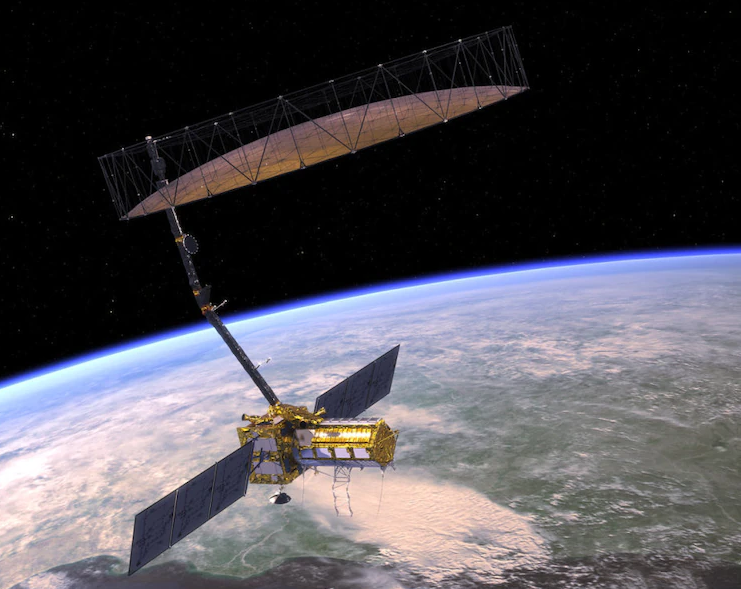
The US Air Force C- 17 aircraft landed in Bengaluru on Wednesday and handed over NASA- ISRO Synthetic orifice Radar (NISAR) NISAR to the Indian space agency which marks a corner in the US- India ties in space collaboration.
“Touchdown in Bengaluru! @ISRO receives NISAR (@NASA- ISRO Synthetic orifice Radar) on a @USAirforce C- 17 from @NASAJPL in California, setting the stage for final integration of the Earth observation satellite, a true symbol of #USIndia civil space collaboration,” twittered US Consulate General Chennai.
NISAR, an Earth- observation satellite, is being concertedly developed by the National Aeronautics and Space Administration (NASA) and the Indian Space Research Organization (ISRO).
NISAR was envisaged by NASA and ISRO eight times ago in 2014 as a important demonstration of the capability of radar as a wisdom tool and help us study Earth’s dynamic land and ice shells in lesser detail than ever ahead.
It’s anticipated to be launched in January 2024 from Satish Dhawan Space Centre into a near-polar orbit. The satellite will operate for a minimum of three times. It’s a Low Earth Orbit (LEO) overlook. NISAR will collude the entire globe in 12 days.
NISAR will be the first radar of its kind by space to totally collude Earth, using two different radar frequentness (L- band and S- band) to measure changes in our earth’s face lower than a centimeter across.
NISAR will give a wealth of data and information about the Earth’s face changes, natural hazards, and ecosystem disturbances, helping to advance our understanding of Earth system processes and climate change.
The charge will give critical information to help manage natural disasters similar as earthquakes, surfs, and stormy eruptions, enabling briskly response times and better threat assessments.
NISAR data will be used to ameliorate husbandry operation and food security by furnishing information about crop growth, soil humidity, and land- use changes.
The charge will give data for structure monitoring and operation, similar as monitoring of oil painting tumbles, urbanization, and deforestation.
NISAR will help to cover and understand the impacts of climate change on the Earth’s land face, including melting glaciers, ocean- position rise, and changes in carbon storehouse.


