


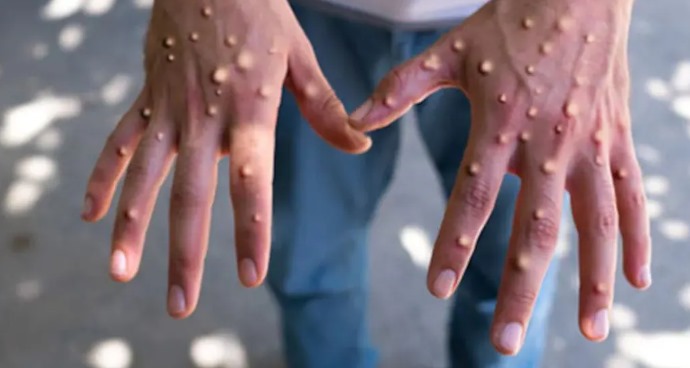
Mpox has been declared a global public health emergency, with researchers working to understand the virus’s transmission and impact. The current strain, known as clade 1b, has been spreading across Africa since its initial detection in Kamituga, Democratic Republic of the Congo. Recently, a case was reported in Sweden from a traveler who visited an affected area, marking the first diagnosis outside Africa.
David Kelvin, a microbiology and immunology professor at Dalhousie University and a leading researcher on the Kamituga strain, expressed concern about the broader impact of clade 1b compared to previous strains. “Clade 2b, which triggered the 2022 public health emergency, was confined to a specific social group. In contrast, clade 1b is affecting diverse communities,” he told Global News.
Clade 2b’s outbreak in 2022 was notably concentrated within the LGBTQ2 community, raising concerns about stigmatization. Clade 1b, however, is spreading more broadly and affecting both adults and children. Early studies have shown cases among heterosexual individuals and, notably, in children.
Dr. Don Vinh, an infectious diseases specialist at McGill University Health Centre, emphasized the importance of avoiding incorrect categorizations. “The 2022 outbreak was incorrectly labeled as a ‘gay disease,’ and it would be equally wrong to label clade 1b as a ‘straight disease,'” Vinh said.
Contagiousness and Transmission
Health Canada indicates that clade 1b might be more transmissible and cause more severe illness than clade 2. Some outbreaks have had fatality rates of up to 10%, though recent cases show lower mortality.
The primary transmission method is close contact, particularly skin-to-skin with an infected person, or through contact with the virus’s rash or scabs. While sexual contact is a known mode of transmission, other forms of close contact, such as kissing and social interactions, can also spread the virus. For example, a case involved a hairdresser who contracted and transmitted the virus through close contact with clients.
Children are also at risk due to their frequent close contact in schools. Mpox can spread through saliva, respiratory secretions, and bodily fluids or lesions. The CDC notes that while face-to-face interactions can spread the virus through respiratory droplets, it is not considered airborne.
Dr. Vinh noted that potential transmission routes include sexual networks, household contacts, and possibly even animal-to-human transmission, as mpox is a zoonotic disease.
Preventive Measures
As of August 19, clade 1b has not been detected in Canada. However, precautionary measures are advised:
- Travel Precautions: Avoid crowded places and practice good hygiene, such as frequent handwashing, if traveling to affected areas in Africa.
- Vaccination: Those eligible, particularly individuals with immunodeficiencies or comorbidities, should consider getting the mpox vaccine.
- General Awareness: Stay informed about potential cases and practice good hygiene to minimize risk.
Kelvin emphasized the need for ongoing research to better understand and manage the virus’s spread. “Given how quickly it can spread geographically, vigilance and further studies are crucial,” he said.


