


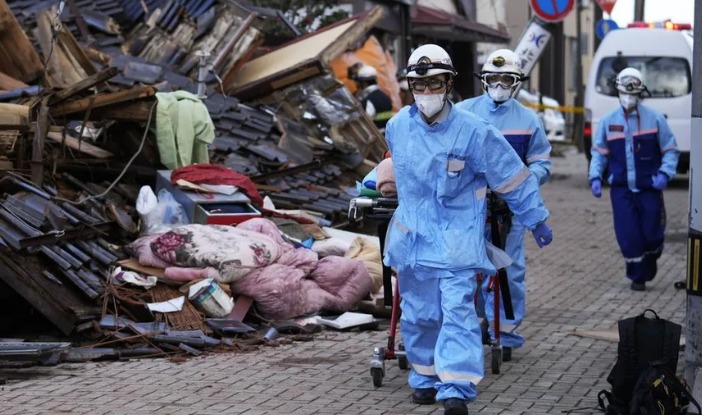
The critical 72-hour period to find survivors from the earthquake that struck ended late on Thursday. On Friday, the death toll from the 7.6 magnitude earthquake in the remote Noto Peninsula rose to 92.
Japan’s Self-Defense Forces increased the number of personnel involved in rescue and relief efforts to 4,600, according to Kyodo news agency. Many individuals are believed to be trapped under their collapsed homes, especially in the municipalities of Suzu and Wajima. The rural structures were not constructed to withstand significant earthquakes that frequently afflict the country.
Thousands of residents are still without power and water, and hundreds remain isolated due to landslides and blocked roads.
“We’ll not give up,” said Japanese Prime Minister Fumio Kishida after a meeting with disaster response officials on Friday. Kishida urged rescue and relief workers to spare no effort in reaching the affected communities.
“The biggest challenge for us is access. The most affected areas are difficult to reach due to obstacles on the roads and landslides caused by the rain and the foreshocks,” said Musubi Yata from the Japanese Red Cross Society. “When there were foreshocks, we had to stop and leave some medical supplies because the roads may collapse,” she told the BBC.
The earthquake on Monday evening also triggered a small ripple that inundated at least 296 acres (120 ha) of land, according to Japan’s land ministry. Japan has committed to spending ¥4.74 billion ($34 million; £27 million) in budget reserves to aid the victims.
Images posted by the Japan Ground Self Defense Force showed personnel loading food, drinking water, and toiletries onto trucks lined up on the road. Personnel were also seen clearing slush and debris from landslide-hit roads. In another photo, personnel were shown carrying a survivor on a stretcher over a snow-covered trail.
During a visit to Wajima on Wednesday, the BBC observed extensive destruction, with some homes and vehicles crushed under collapsing concrete. Many of the city’s old, traditional rural homes had collapsed. The city, with a population of 23,000, now resembles a ghost town as most residents heeded early evacuation warnings when tsunami warnings were issued.


