


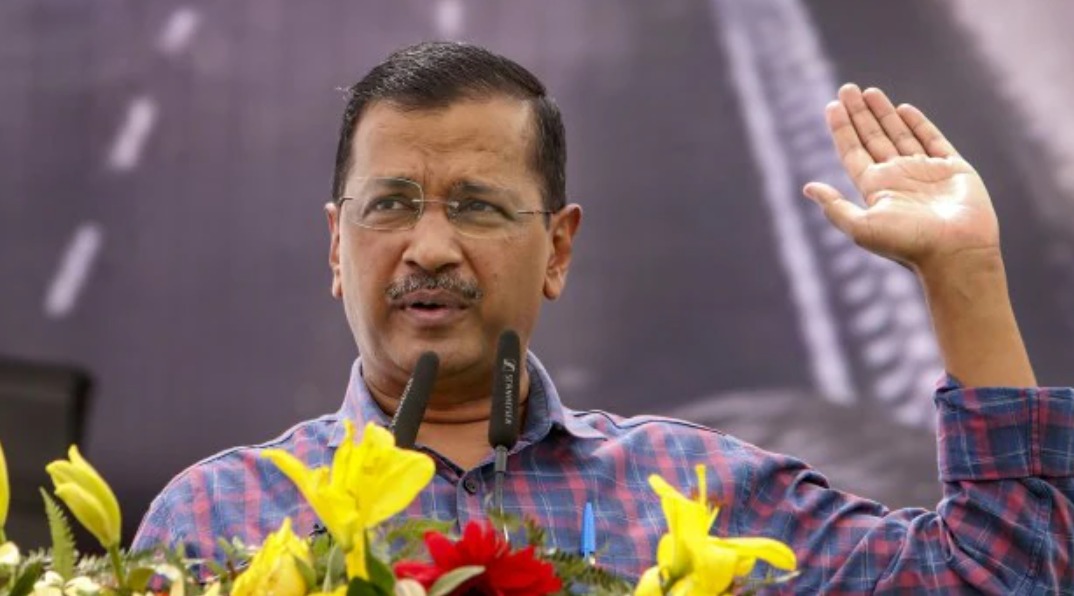
The Supreme Court on Monday morning declined immediate relief to Delhi Chief Minister Arvind Kejriwal regarding a plea challenging his recent arrest on money laundering charges related to an alleged liquor policy scam. Kejriwal, arrested by the Enforcement Directorate on March 21, will have to wait until April 27 for the agency’s response to his plea. The court will reconvene on April 29 to hear arguments.
This implies that Arvind Kejriwal is likely to remain in custody until 10 days after the commencement of the Lok Sabha elections. His Aam Aadmi Party, part of the Congress-led opposition bloc, is considered a significant contender against the ruling Bharatiya Janata Party in Delhi and Punjab, which jointly hold 20 Lok Sabha seats.
During today’s hearing, Abhishek Manu Singhvi, representing Kejriwal, informed the bench of Justice Sanjiv Khanna and Justice Dipankar Datta that he possessed “facts to shock the conscience of the court.” Singhvi also criticized the “selective leaks” aimed at discrediting the Chief Minister and requested “an extremely short date (of Friday)” to initiate the petition hearing. However, the court refused this plea, stating they would provide a reasonable but not immediate date, urging Singhvi to reserve arguments after he persisted in seeking an earlier hearing.
The setback in the Supreme Court follows the rejection of the same petition by the Delhi High Court last week. The High Court determined that the ED had presented sufficient evidence supporting its claim that the Chief Minister was allegedly involved in formulating the now-defunct policy and soliciting bribes amounting to ₹100 crore.
Kejriwal, who vehemently opposed his arrest in the High Court, cited the timing of the agency’s action and alleged political conspiracy. Despite his arguments, the High Court upheld his arrest’s validity, leading to the dismissal of his plea.
Kejriwal turned to the Supreme Court after the High Court’s decision but faced delays as the top court declined to constitute a special bench and was closed for Eid when he approached on April 10. Additionally, Friday was a holiday.
Kejriwal has denounced his arrest as an “unprecedented assault on the tenets of democracy,” asserting his party’s innocence and attributing the case to “political vendetta.” Meanwhile, in a related hearing, a Delhi court extended Kejriwal’s judicial custody until April 23.
In a separate matter, the ED has also arrested two of Kejriwal’s associates in connection with the alleged liquor policy scam. His former deputy, Manish Sisodia, was arrested last February, while Rajya Sabha MP Sanjay Singh was arrested in October. Singh was granted bail this month by the Supreme Court, which questioned the ED’s actions, including the absence of recovered bribe money. The agency has accused the Aam Aadmi Party of conspiring to receive bribes amounting to ₹600 crore for liquor permits in Delhi.


