


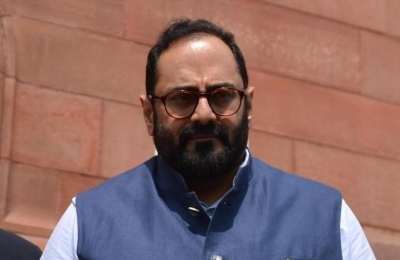
After a blurted trove of internal Uber documents revealed that the ride-hailing platform allegedly broke laws and intimately lobbied governments to expand encyclopedically, Minister of State for Electronics and IT Rajeev Chandrasekhar said on Wednesday that the government is planning tougher rules to constrain Big Tech and social media platforms operating in India.
In an interview with Nikkei Asia, the minister said that the government is set to strain laws for the internet and digital players.
” India will also have new laws and regulations. The issue of laws and rules in the tech space will be a continuously evolving one. Whether there will be structurally new laws, emendations to old laws, fresh rules and directions, I would say, all of the below,” Chandrasekhar was quoted as saying in the report.
According to The Guardian report, exposures from the blurted lines include how elderly Uber directors ordered the use of a” kill switch” to stop police and controllers from penetrating sensitive data during raids on its services in India and other countries.
” In some ways, the( Uber) exposures only confirm that in numerous cases, the Big Tech companies are, in a sense, gaming the system, and most importantly, the guests,” Chandrasekhar noted.
India has drafted new IT Rules, 2021 to fix further responsibility on social media interposers and a particular data protection bill is also in the channel.
After Twitter took the government to court last week over content blocking orders, Chandrasekhar said that all foreign interposers and platforms have a right to approach the court and judicial review in India.
” But inversely, all conciliator/ platforms operating then have an unequivocal obligation to misbehave with our laws and rules,” he posted last week, as Twitter moved the Karnataka High Court against the government’s order to take down some content on its platform.
The themicro-blogging platform has easily said that it’ll hear to the Indian government’s content junking demands seriously only when the particular data protection bill is forcefully in place.
The proposed Personal Data Protection Bill also has vittles that put heavy penalties on tech companies for non-compliance.
It has also proposed to term social media companies as publishers, which will make them liable for the content on their platforms.
Chandrasekhar told Nikkei Asia that large technology companies have been escaping nonsupervisory scrutiny for” further than a decade” by situating themselves as” originators that help citizens with convenience”.
” There wasn’t enough scrutiny and regulations because they were seen as doing good. It’s only lately that the mindfulness of stoner detriment that these platforms are able of, or responsible for, has come to the van,” he stressed.
The edited draft by the IT Ministry has revealed a plan to form an prayer panel that can reverse content temperance opinions by Big Tech companies like Twitter, Facebook, and YouTube.
The new IT rules also bear big social media platforms to help the government trace the originator of dispatches in special cases.


