


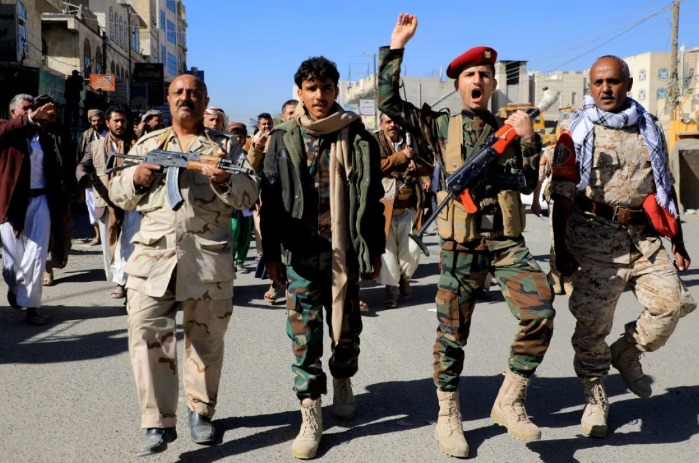
The U.S. and British forces conducted a significant retaliatory strike on Thursday, targeting over a dozen locations used by the Iranian-backed Houthis in Yemen. The strike involved warship-launched Tomahawk missiles and fighter jets, hitting logistical centers, air defense systems, and munitions storage sites. President Joe Biden stated that the strikes were a response to Houthi attacks on maritime vessels in the Red Sea, including the use of anti-ship ballistic missiles for the first time in history.
Biden emphasized that the U.S. and its allies took action after attempts at political resolutions and careful consideration. The Netherlands, Canada, Australia, and Bahrain are providing support for the operation, including logistics and intelligence.
Explosions were reported in Yemen’s capital, Sanaa, and the western harbor area of Hodeida, the largest port city controlled by the Houthis. This marks the first U.S. military response against the Houthis for their ongoing campaign of drone and missile attacks on commercial vessels since the start of the conflict.
The coordinated military assault comes following a warning issued by the White House and allied nations to the Houthis to halt their attacks or face military action. Although attacks paused briefly, the Houthis resumed their activities, prompting the recent strikes.
U.K. Prime Minister Rishi Sunak confirmed that the Royal Air Force conducted targeted strikes against Houthi military installations, emphasizing the necessity of action to defend against the group’s dangerous attacks on shipping.
Houthi leader Abdel Malek al-Houthi responded, promising a fierce military reaction to any American attack on their positions in Yemen. The Houthis claim their attacks aim to stop Israel’s actions in Gaza, but their targets increasingly impact the crucial trade route connecting Asia, the Middle East, and Europe.
The UN Security Council passed a resolution demanding an immediate cessation of Houthi attacks and implicitly condemning Iran as their munitions supplier. The resolution received 11 votes in favor, with Russia, China, Algeria, and Mozambique abstaining.


