


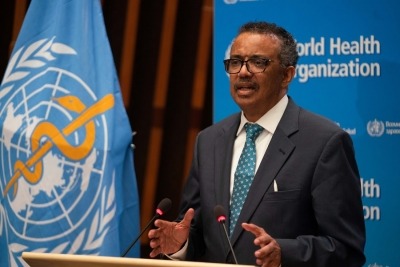
According to WHO (World Health Organization), the double mutant Indian Covid variant identified as B1617 was first detected in India, has spread to at least 17 countries.
Until 27th April 2021 B1617 Covid variant had been detected in over 1,200 sequences as it was uploaded on the open-access database GISAID (the Global Initiative on Sharing Avian Influenza Data) from at least 17 countries.
As per the global health agency in its weekly epidemiological update on the pandemic, most sequences of the variant were uploaded from India, the UK, the US, and Singapore. This is as per the reports on Tuesday.
GISAID which is a German non-profit organization was launched in 2016 as a database for sharing flu genomes.
The new Covid-19 cases have increased globally for the 9th consecutive week as 5.7 million new cases reported last week that suppressed the previous peak as per WHO update.
The report noted India accounts for 38% of global cases reported in the past week.
The Indian variant B1617 has been deemed a ‘variant of interest’ instead of a ‘variant of concern’ by the WHO. But WHO has classified the British, South African, and Brazilian Covid-19 variants as variants of concern.
B1617 Covid-19 variants were first detected in India on 1st December 2020. The B1617 Covid-19 variant contains mutations from 2 separate virus variants known as E484Q and L452R. This variant is partly held responsible for the 2nd and massive resurgence of coronavirus in India.
More than 3 lakh Covid-19 cases have been reported in India for the 7th consecutive day on Wednesday.
In the last 24 hours on Wednesday India reported a record number of 3,60,960 cases and 3,293 deaths as per India’s health ministry’s data released on Wednesday morning.
The WHO update said, “Preliminary modeling by WHO based on sequences submitted to GISAID suggest that B1617 has a higher growth rate than other circulating variants in India, suggesting potential increased transmissibility, with other co-circulating variants also demonstrating increased transmissibility”.
Other drivers may include challenges around the implementation and adherence to public health and social measures and social gatherings (including mass gatherings during cultural and religious celebrations, and elections).


